Ants Control
Ant trails along baseboards or kitchen counters almost always lead back to a colony outside. We identify the species first so the treatment actually breaks the colony — not just the trail you can see.
Quick answer
Why do ants keep coming back after I spray them?
Killing the visible trail leaves the queen and the rest of the colony alive — so foragers reroute and come back stronger within days. Effective ant control uses slow-acting baits the workers carry back to the colony, eliminating the source.
How to identify ants
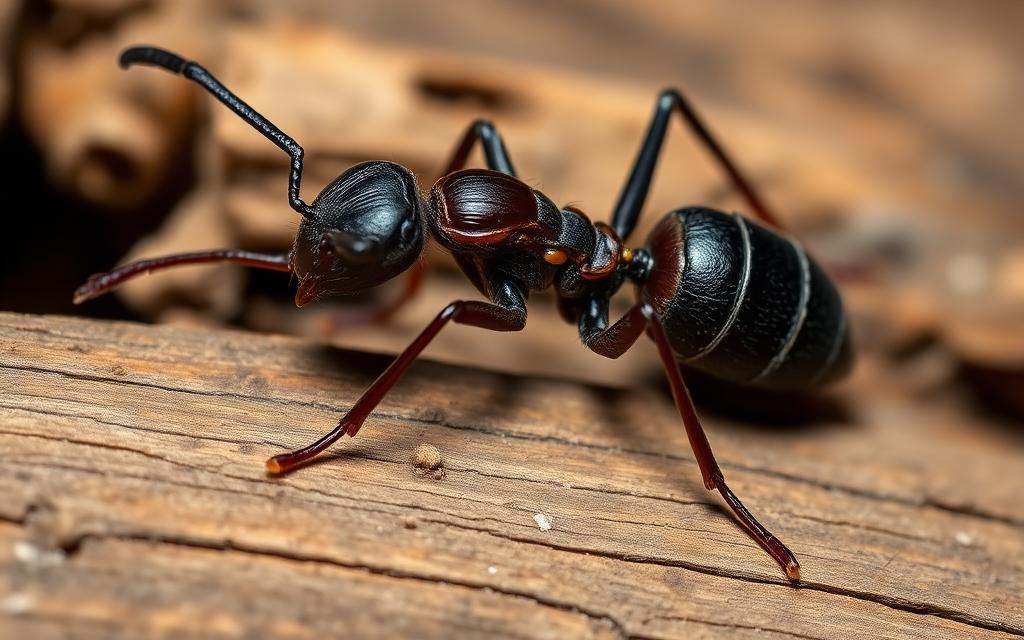
The three species we treat most in Colorado: pavement ants (small, dark, nest in cracks and under slabs), carpenter ants (large, 1/2" black, hollow out moist wood for nesting), and odorous house ants (small, brown, smell like rotten coconut when crushed). Correct ID changes the treatment plan.
Behavior & life cycle
Worker ants follow pheromone trails to food sources back to the colony. Spraying the trail with consumer products kills foragers but signals the colony to split into multiple sub-colonies — a phenomenon called budding — which makes the problem worse. Slow-acting professional baits let workers carry the active ingredient back to the queen.
Health & property risks
Most ants in Colorado are nuisance pests, not health risks. The exception is carpenter ants — they don't eat wood, but they hollow out moist or rotting wood for nesting, causing structural damage similar to (but slower than) termites.
Signs you may have a ants problem
- Steady trails along counters, baseboards, or window frames
- Small piles of fine sawdust (a carpenter ant warning sign)
- Winged swarmers indoors in spring
- Ants near pet bowls or sticky spills overnight
Our treatment approach
- 1Species ID — pavement vs. carpenter vs. odorous house ant
- 2Indoor non-repellent treatment along entry points
- 3Exterior perimeter granule + liquid barrier
- 4Targeted baiting for colony elimination, not just trail control
Prevention tips
- Wipe sticky spills (especially sugary drinks) immediately
- Seal cracks around window frames, sills, and exterior doors
- Trim shrubs and tree branches that touch the house — they are ant highways
- Address moisture problems around windows, decks, and fascia (carpenter ant magnets)
When to call Chaney
If any of these describe your situation, it's time to bring in a pro.
- You see steady ant trails inside that return after cleaning
- Fine sawdust piles appear near windows, decks, or fascia (carpenter ants)
- Winged ant swarmers show up indoors in spring
- Sprays seem to scatter ants into more rooms instead of stopping them
Frequently asked questions
Are carpenter ants as bad as termites?+
Carpenter ants don't eat wood, but they hollow it out to nest. Over time that causes real structural damage — especially around leaky windows, decks, and fascia boards. Treat them as soon as you spot fine sawdust piles.
Should I spray ant trails myself first?+
Please don't. Most consumer sprays repel ants and cause them to split into multiple sub-colonies, making the problem worse. Call us first.
How long does ant treatment take to work?+
You'll usually see a sharp drop in activity within 3–5 days as workers carry bait back to the colony, with full elimination in 1–2 weeks for most species.
Ready for a quote?
Tell us about the problem — we'll get back within one business day.