
Are Mice More Likely to Invade Homes in Winter?
Quick Answer
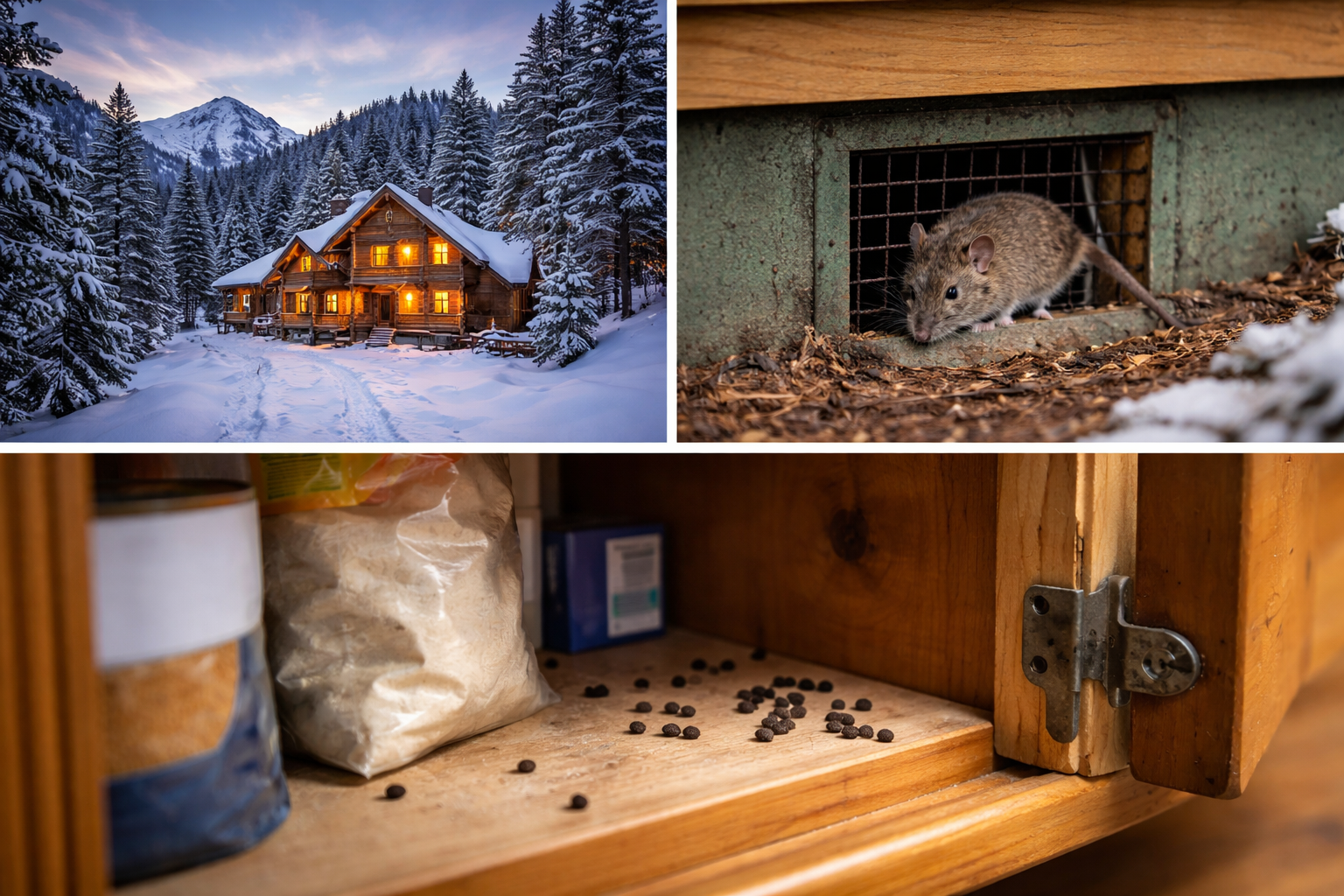
Yes—mice are significantly more likely to invade mountain homes during winter, especially in Colorado. As temperatures drop and snow covers food sources, mice seek warmth, shelter, and easy access to food. Heated cabins, log homes, and rural properties at higher elevations are prime targets.
Why Do Mice Enter Mountain Homes in Winter?
Cold weather forces mice to conserve energy. In mountain environments, winter arrives earlier and lasts longer, which accelerates this behavior.
Once nighttime temperatures consistently drop below freezing, mice actively look for structures that provide:
-
Stable warmth
-
Protection from predators
-
Reliable food sources
Mountain homes offer all three—often with fewer nearby neighbors to notice early signs of activity.
Are Mice Common at High Elevations?
Yes. Rodents absolutely survive and thrive at high altitude, including elevations above 8,000 feet.
What changes at elevation isn’t whether mice live there—it’s how aggressively they seek shelter. Snowpack limits natural food access, and frozen ground restricts burrowing. That pushes mice indoors faster than in lower elevations like Colorado Springs or Pueblo.
How Do Mice Get Into Cabins and Mountain Homes?
Mice can squeeze through openings as small as ¼ inch. In mountain construction, common entry points include:
-
Gaps in log joints or settling logs
-
Utility and propane line penetrations
-
Unsealed crawlspace vents
-
Garage door corners
-
Chimney flashing gaps
Log homes and older cabins are especially vulnerable due to natural expansion, contraction, and aging materials.
Signs of a Mouse Problem
Early detection matters. Watch for:
-
Droppings in cabinets, drawers, or near baseboards
-
Scratching sounds at night in walls or ceilings
-
Chewed food packaging or insulation
-
Nesting material (shredded paper, fabric, insulation)
If you notice activity in winter, it usually means mice have already settled in, not just passed through.
Can You Prevent Mice in Winter?
You can reduce risk, but winter prevention has limits once mice are established.
Helpful steps include:
-
Sealing visible exterior gaps before snowfall
-
Storing food in sealed containers
-
Removing clutter near foundations
-
Keeping garages clean and organized
However, once mice are inside, DIY methods often fail—especially in large, rural, or high-altitude homes.
How Chaney Pest Elimination Can Help
Chaney Pest Elimination specializes in mountain home rodent control across Teller, Park, El Paso, and Chaffee Counties. With decades of experience in Colorado’s high-altitude environments, we focus on exclusion, targeted control, and long-term prevention, not just traps.
Learn more about our professional rodent services here:
👉 https://www.chaneypestelimination.com/rodents/
👉 https://www.chaneypestelimination.com/residential-pest-control/
Frequently Asked Questions About Winter Mice in Mountain Homes
Q: How cold does it need to be before mice come inside?
A: Once nighttime temperatures consistently fall below freezing, mice begin seeking indoor shelter.
Q: Can mice survive winters at 9,000+ feet?
A: Yes. Mice are highly adaptable and common at high elevations throughout Colorado.
Q: Are pack rats the same as mice?
A: No. Pack rats are larger, behave differently, and are common in mountain areas. Identification matters.
Q: Is store-bought mouse poison safe and effective to use in cabins?
A: Often no. Poison can cause secondary poisoning, odors, and safety risks—especially in rural settings. Chaney Pest Elimination uses commercial-grade and industry-standard elimination practices that are more effective than store-bought remedies.
Q: Will mice leave on their own in spring?
A: Not reliably. If food and shelter remain, mice often stay year-round.
Final Thoughts
Winter mouse problems in mountain homes are common—but not inevitable. Early action and professional exclusion are the most effective ways to protect your property before damage escalates.
About the Author
John Chaney is a pest control expert with over 30 years of experience serving Teller, Park, El Paso, Fremont and Chaffee Counties. A former industry instructor and Syngenta territory manager, John specializes in environmentally responsible solutions for mountain homes.
👉 https://www.chaneypestelimination.com/about/
Need Help With Mice or Rodents?
Call Chaney Pest Elimination at (719) 650-0246 or request help here:
👉 https://www.chaneypestelimination.com/contact/
[/fusion_text][/fusion_builder_column][/fusion_builder_row][/fusion_builder_container]