
Colorado Spider Identification Guide: Common Species, Bites & When to Worry
A practical photo guide to the spiders Colorado homeowners actually encounter — which are dangerous, which are harmless, and how to tell them apart.
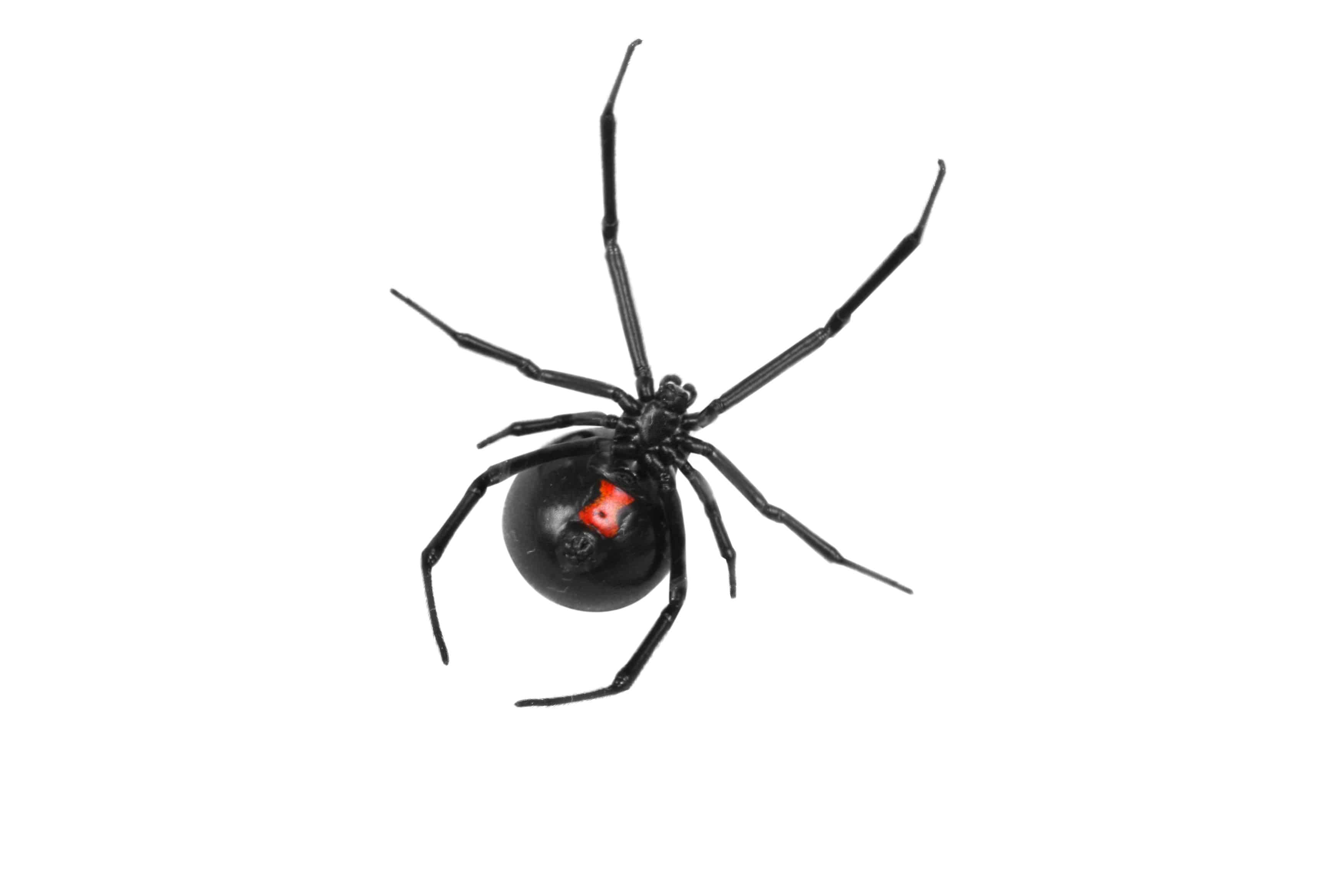
Colorado Spider Identification Guide: Common Species, Bites & When to Worry
Most spiders in Colorado are harmless — and a few are actively helpful, eating the insects you don't want in your home. But a small number deliver bites that need real attention. This guide walks through the species we get asked about most often in Woodland Park, Divide, Florissant, and the surrounding Teller and Park County communities, with photos so you can match what you're seeing.
Western Black Widow (Latrodectus hesperus)
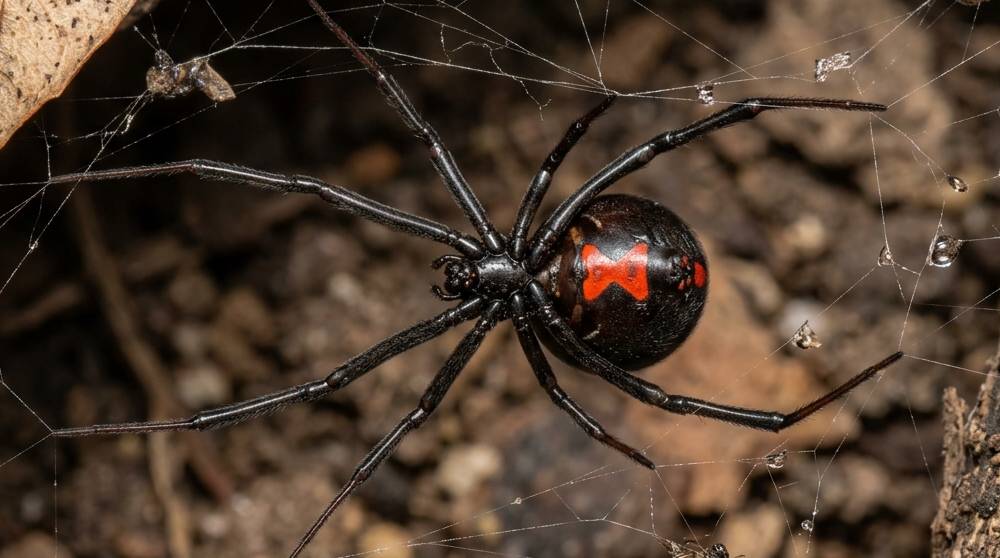
What to look for: Glossy black body, roughly the size of a dime to a nickel, with the unmistakable red hourglass marking on the underside of the abdomen. Males and juveniles are smaller, browner, and often striped — still a widow, still worth respecting.
Where they live: Undisturbed, dark, dry spots — woodpiles, crawl spaces, garage corners, under outdoor furniture, inside rarely-used sheds, and around foundation gaps. Webs are messy, irregular, and surprisingly strong.
Bite risk: Medically significant. Bites cause severe muscle cramping, sweating, and pain that can last days. Rarely fatal in healthy adults, but seek medical care immediately — especially for children, older adults, or anyone with heart conditions.
Hobo Spider (Eratigena agrestis)

What to look for: Brown body, roughly 1 to 1.75 inches across including legs, with a herringbone or chevron pattern on the abdomen. Long legs without distinct bands (banded legs usually means a harmless grass spider, not a hobo).
Where they live: Ground level. They build funnel-shaped webs in window wells, basement corners, around foundations, and in cluttered garages. They're fast runners and rarely climb walls.
Bite risk: Once blamed for necrotic wounds, the hobo spider's reputation has softened — current research suggests bites are uncommon and typically minor. Still, if you have a confirmed bite that blisters or worsens, see a doctor.
Wolf Spider (Family Lycosidae)
.JPG)
What to look for: Big, hairy, brown or gray, often startlingly large — up to 2 inches across. Two prominent eyes on the front of the face plus six smaller eyes. Females are sometimes seen carrying an egg sac or dozens of spiderlings on their back.
Where they live: Outdoors mostly — under rocks, in gardens, along foundations. They wander indoors in fall when temperatures drop, especially into basements, garages, and ground-floor rooms.
Bite risk: Low. Wolf spiders can bite if cornered, but it's comparable to a bee sting — painful but not medically dangerous for most people. They're not aggressive and would rather flee.
Bold Jumping Spider (Phidippus audax)

What to look for: Small (under half an inch), compact, fuzzy black body with white, orange, or iridescent green spots on the abdomen. Famously curious — they will often turn to look at you.
Where they live: Sunny window sills, fence posts, exterior walls, and gardens. They hunt visually instead of building webs.
Bite risk: Essentially none. Jumping spiders are harmless and arguably the most charming spider in Colorado. Leave them be — they eat the pests you don't want.
Other common spiders:
Tiny Black Spiders (Usually Cobweb or Ground Spiders)
What to look for: Very small — often an eighth of an inch or less — dark brown to black, usually spotted on walls, ceilings, or scurrying across the floor. Most of these are common house spiders, ground spiders, or juvenile jumping spiders.
Where they live: Everywhere, honestly. Ceiling corners, behind furniture, baseboards, window frames. If it's tiny and built a small tangle of web in a corner, it's almost certainly a harmless cobweb spider.
Bite risk: Essentially zero. These spiders are too small to bite through human skin in most cases, and they have no interest in trying. They're quietly eating gnats, mites, and other insects you'd rather not have. One note of caution: juvenile black widows can also be small and dark — but they'll have striping or early hourglass markings and stick to the messy, low, undisturbed webs described above, not tidy corners at eye level.
Harvestmen / "Daddy Longlegs" (Order Opiliones)
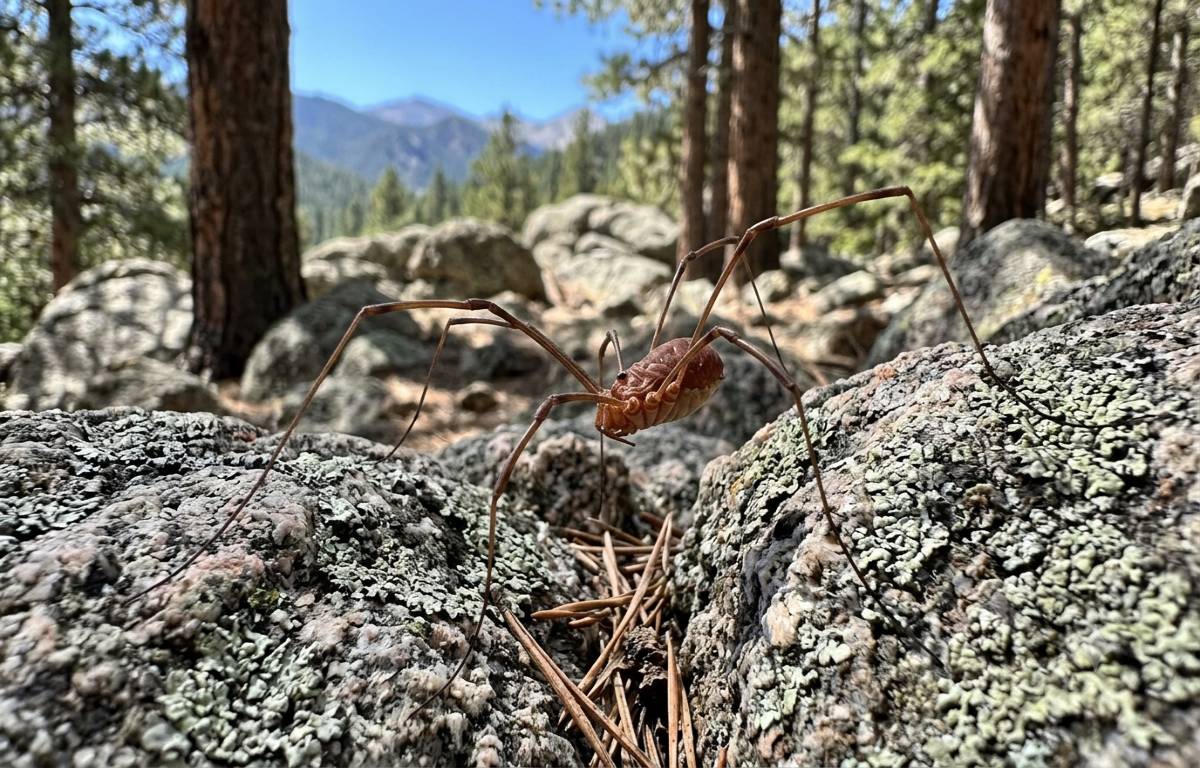
What to look for: A single small, oval body with eight extremely long, thin legs. No visible "waist" between body segments — that's the giveaway. True spiders have two distinct body sections; harvestmen have one.
Where they live: Outdoors under eaves, in crawl spaces, around foundations, and in damp shaded spots. They often cluster together in groups in the fall.
Bite risk: None — and here's the part worth knowing: harvestmen aren't spiders at all. They have no venom glands, no fangs, and can't produce silk. The old myth that daddy longlegs are "the most venomous spider in the world but their fangs are too small to bite you" is completely false on every count. They're scavengers and predators of small insects, and they're totally harmless to people and pets.
Quick ID: Is It Dangerous?
-Shiny black with a red hourglass underneath? Western black widow. Treat with caution.
-Brown, ground-dwelling, funnel web in a window well? Likely a hobo or harmless grass spider. Banded legs = grass spider (harmless).
-Big, hairy, fast, runs across the floor? Wolf spider. Startling but not dangerous.
-Small, fuzzy, watches you back? Jumping spider. Harmless and beneficial.
*One important note for Colorado: brown recluse spiders (Loxosceles reclusa) are not established here. CSU Extension and the Denver Museum of Nature & Science have repeatedly confirmed that verified recluse specimens from Colorado are exceptionally rare and almost always misidentifications. If a Colorado provider tells you a wound is a "recluse bite," ask for confirmation — it is far more likely a skin infection or another spider entirely.
When to Call a Professional
Reach out to us if you are seeing:
-Repeated black widow sightings around the home, garage, or play areas
-Multiple funnel webs in window wells or basement corners
-A sudden spike in spiders indoors (usually a sign of an insect problem feeding them)
-A bite that blisters, spreads, or does not heal within a few days — see a doctor first, then call us to deal with the source
We service Colorado Springs, Cascade, Green Mountain Falls, Woodland Park, Divide, Florissant, Cripple Creek, Fairplay, Buena Vista, and the surrounding communities.
If you would like a property walk-through to identify what you are dealing with and seal the entry points spiders are using, request a quote or call us at 719-650-0246.
Need help with a pest problem?
Free quotes throughout Colorado Springs, Teller County, and the mountain communities.