Hantavirus in Colorado: Myths, Facts, and What Mountain Homeowners Actually Need to Know
Colorado ranks 2nd in the U.S. for hantavirus. Learn the difference between Sin Nombre and the cruise ship strain, how it spreads, and how to clean safely.
Hantavirus in Colorado: Myths, Facts, and What Mountain Homeowners Actually Need to Know
Hantavirus in Colorado is caused by the Sin Nombre strain, carried primarily by deer mice, and it spreads through contact with rodent droppings, urine, or nesting material — not from person to person. Colorado ranks second in the U.S. for confirmed cases since 1993, and risk is highest in spring and summer when homeowners clean cabins, garages, and outbuildings. The disease is rare but serious. The good news: it is preventable with straightforward precautions and, when needed, professional rodent control.
What this post covers:
-The difference between the Colorado strain (Sin Nombre) and the cruise ship strain (Andes virus) making news right now
-How hantavirus actually spreads — and how it does not
-How to identify deer mice versus common house mice
-How to safely clean spaces that may have rodent contamination
-When to handle a rodent situation yourself and when to call a professional
-What makes mountain communities in Teller, Park, and Chaffee Counties higher-risk environments
Is the Colorado Hantavirus the Same as the Cruise Ship Outbreak?
No. The hantavirus circulating in Colorado is a different strain from the one linked to the MV Hondius cruise ship outbreak in May 2026, and they behave very differently.
The strain responsible for the cruise ship outbreak — and for the death of Betsy Arakawa in New Mexico in 2025 — is the Andes virus, a South American strain. It is notable because, unlike most hantaviruses, it can spread from person to person under close contact. The Andes virus is not established in North American rodent populations, and the Colorado Department of Public Health and Environment confirmed that the fatal Douglas County case in May 2026 has no connection to the cruise ship outbreak.
The hantavirus found in Colorado is the Sin Nombre virus (Spanish for "nameless"), carried by deer mice (Peromyscus maniculatus). Sin Nombre does not spread person to person. It spreads when a person disturbs contaminated rodent droppings, urine, or nesting material and inhales the airborne particles. That is the exposure route that matters for Colorado homeowners, and it is the one that is entirely preventable.
How Does Hantavirus Actually Spread?
Hantavirus spreads when contaminated dust from deer mouse droppings, urine, or nesting material becomes airborne and is inhaled. Direct contact with live or dead mice and, less commonly, mouse bites can also transmit the virus.
The single most common exposure scenario in Colorado is also the most avoidable: a homeowner opens a cabin, shed, garage, or outbuilding in spring, sees some droppings, and sweeps or vacuums without protection. Dry-sweeping and vacuuming aerosolize the viral particles directly into the breathing zone. That is how most exposures happen.
According to Colorado health officials, roughly a third of confirmed hantavirus cases in Colorado involve people who never saw a mouse. They simply disturbed a contaminated space without knowing rodents had been there.
Hantavirus does not spread through:
Casual contact with another person
Coughing or sneezing from an infected person (in the Sin Nombre strain)
Touching surfaces in public spaces
Contact with pets or livestock
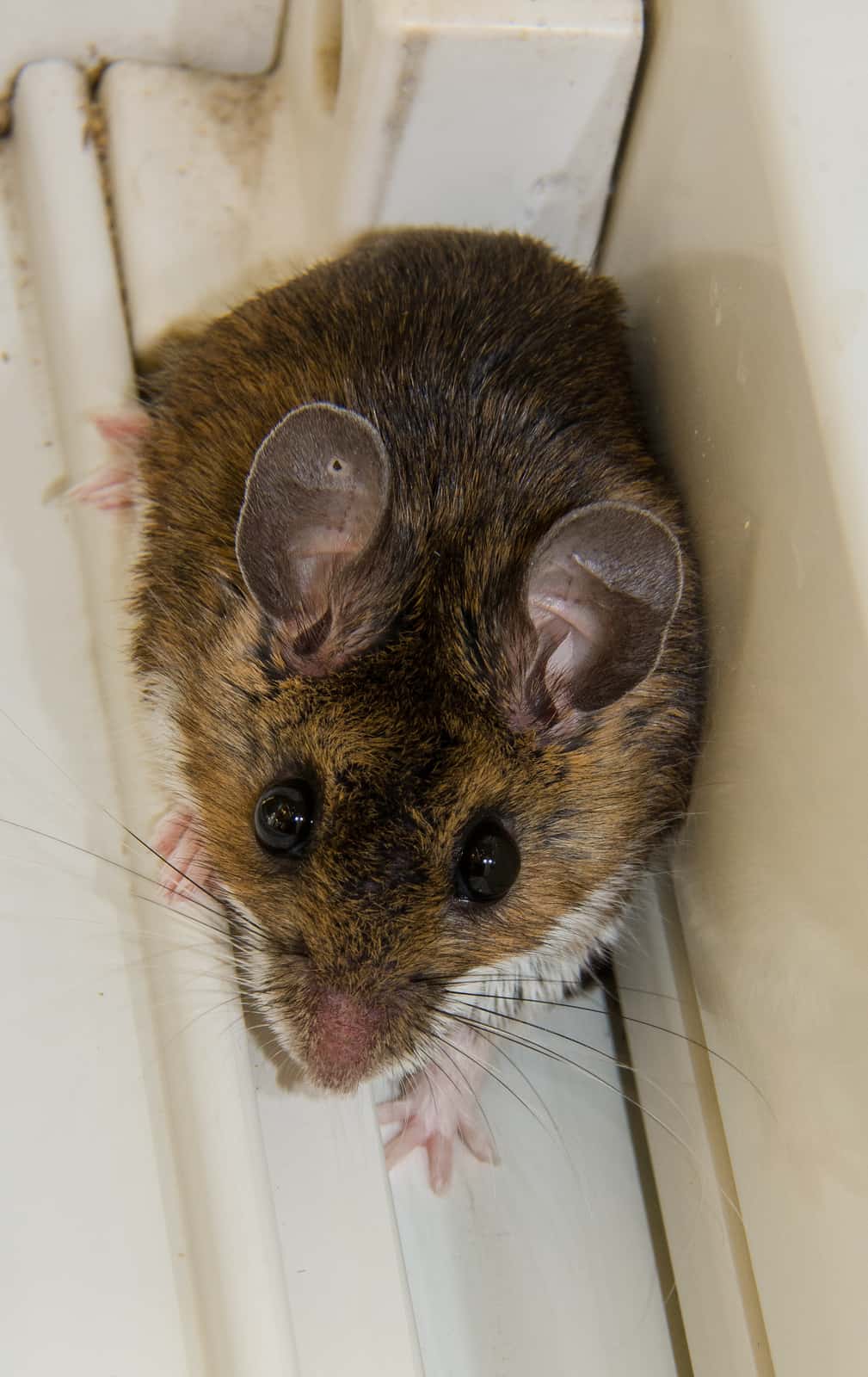
How Do You Identify Deer Mice? (And Why It Matters)
Fur color
Deer mouse: Brown or tan back, white belly — two-toned.
House mouse: Uniform grayish-brown all over.
Tail
Deer mouse: Bicolored — dark on top, white underneath; often as long as the body.
House mouse: Uniform gray, hairy, slightly shorter.
Eyes and ears
Deer mouse: Large, prominent eyes; large rounded ears.
House mouse: Smaller eyes; ears more proportionate to the head.
Hantavirus risk
Deer mouse: Yes — primary carrier of Sin Nombre virus in Colorado.
House mouse: No — house mice do not carry Sin Nombre.
Habitat preference
Deer mouse: Rural, wooded, and semi-rural areas; mountain cabins, outbuildings, woodpiles.
House mouse: More urban and suburban; structures near food sources.
In Teller and Park Counties, deer mice are by far the more common species in homes. Homes in Woodland Park, Cripple Creek, Fairplay, and the surrounding rural areas sit in exactly the open, wooded terrain that deer mice favor. When our technicians inspect homes in these areas, it is rare to find a structure — particularly an older one with gaps around foundation sills or utility penetrations — that has not had some deer mouse activity at some point.
Is Colorado Really at High Risk for Hantavirus?
Colorado has the second-highest number of confirmed hantavirus cases in the United States since the CDC began tracking in 1993. That context matters — and so does the full picture.
Since 1993, Colorado has recorded over 120 confirmed cases. Since 2016, according to the Colorado Department of Public Health and Environment, there have been 37 known cases, with nine deaths. Those numbers make clear that individual cases per year are small — but the fatality rate when serious illness develops is significant.
Risk is highest for people who spend time in or around structures that deer mice can access: mountain cabins, outbuildings, barns, garages, campers, and storage areas. High elevation, wooded terrain, and proximity to open space all increase the likelihood that deer mice are present. Chaffee County residents in the Arkansas River corridor, Teller County homeowners with outbuildings, and Park County cabin owners who open up properties in spring are all in elevated-risk categories — not because they are doing anything wrong, but because they live and recreate in deer mouse country.
How Do You Safely Clean an Area with Rodent Droppings?
Cleaning up rodent droppings or nesting material safely requires wet disinfection, not dry sweeping. This is the step most people get wrong, and it is the step that matters most for hantavirus prevention.
The CDC-recommended process for cleaning potentially contaminated areas:
Ventilate the space first. Open windows and doors for at least 30 minutes before entering to allow air circulation. Leave the area while it ventilates.
Put on protective gear. Wear rubber or plastic gloves. An N95 respirator (not a standard dust mask) is recommended for enclosed spaces or heavy contamination.
Wet down droppings before disturbing them. Use a household disinfectant spray or a bleach solution (1.5 cups bleach per gallon of water). Soak droppings thoroughly and let sit for five minutes. This deactivates the virus and prevents particles from becoming airborne.
Wipe up with paper towels. Do not sweep. Place paper towels and droppings in a sealed plastic bag.
Disinfect the area again. Spray the surface a second time and wipe down.
Dispose of gloves and wash hands thoroughly. Bag gloves with the other waste. Wash hands with soap and water for at least 20 seconds.
Do not use a shop vacuum or standard vacuum cleaner to pick up droppings. Vacuums exhaust air and will aerosolize viral particles into the room. This is one of the most common mistakes we see — and one that is easy to avoid once you know the correct approach.
When Should You Call a Pest Professional Instead of Handling It Yourself?
Not every rodent situation requires professional involvement, but some do — and hantavirus risk is a legitimate reason to consider professional help when the scope of contamination is significant.
You can likely handle it yourself when:
1. You find a small number of droppings in an accessible, ventilable space
2. There are no signs of active infestation (no fresh droppings, no nesting material, no live mice)
3. You have access to gloves, an N95 respirator, and a disinfectant spray
4. The space can be adequately ventilated before you enter
Call a professional when:
*There is extensive contamination — heavy droppings, large nesting areas, or evidence of long-term activity in an enclosed space like an attic, crawl space, or wall void
*The infestation is active and ongoing
*You are not able to ventilate the space adequately
*Anyone in the household is immunocompromised, pregnant, or elderly
*You want professional confirmation of the species present and an assessment of how they are entering the structure
The value of a professional inspection in these situations is not just the cleanup. It is the entry-point assessment: identifying how deer mice are getting into the structure and sealing those pathways so the problem does not repeat. A single gap around a pipe penetration or a crawl space vent with a damaged screen can account for years of recurring activity.
When John Chaney walks a mountain property in Teller or Park County, the inspection always includes a perimeter check for the kinds of gaps deer mice use — foundation sill gaps, utility penetrations, crawl space vents with damaged screens. Those details matter as much as what is found inside.
Hantavirus Myth vs. Fact — Quick Reference
1. Myth: "Hantavirus spreads person to person."
Fact: The Sin Nombre strain in Colorado does not spread person to person. The Andes strain on the recent cruise ship can, but it is not present in North American rodent populations.
2. Myth: "Hantavirus is a desert Southwest disease — not a problem in mountain Colorado."
Fact: Colorado is the second-most-affected state in the U.S. Cases are distributed across the state, including mountain communities in Teller, Park, and Chaffee Counties.
3. Myth: "If I haven't seen a mouse, I don't have a problem."
Fact: Roughly one third of Colorado hantavirus cases involve people who never saw a mouse. Droppings and nesting material in hidden spaces can pose risk even without visible rodent activity.
4. Myth: "Sweeping up droppings quickly is fine as long as I wash my hands."
Fact: Dry sweeping aerosolizes viral particles. The correct method is to wet droppings with disinfectant first, then wipe up — never sweep or vacuum.
5. Myth: "House mice carry hantavirus too."
Fact: Common house mice (Mus musculus) are not known carriers of Sin Nombre hantavirus. Deer mice (Peromyscus maniculatus) are the primary vector in Colorado.
6. Myth: "Hantavirus is so rare it is not worth worrying about."
Fact: Individual cases per year in Colorado are small, but the fatality rate when severe illness develops is significant. Preventive precautions are straightforward and worth taking whenever you clean spaces that deer mice may have accessed.
Frequently Asked Questions: Hantavirus in Colorado
What are the symptoms of hantavirus pulmonary syndrome?
Early symptoms of hantavirus pulmonary syndrome (HPS) typically appear one to eight weeks after exposure and resemble the flu: fatigue, fever, and muscle aches — especially in the thighs, hips, back, or shoulders — sometimes with headaches, dizziness, and chills. Several days later, respiratory symptoms can develop including coughing, shortness of breath, and fluid buildup in the lungs. If you have had potential rodent exposure and develop these symptoms, seek medical care and mention the potential exposure to your provider.
Do deer mice live at high elevations in Colorado?
Yes. Deer mice are highly adaptable and are present throughout Colorado including high-elevation communities in Teller, Park, and Chaffee Counties. They are well-suited to mountain environments and are commonly found in older homes, outbuildings, wood piles, and storage structures in areas like Woodland Park, Buena Vista, Fairplay, and the surrounding rural communities.
Is it safe to open my mountain cabin after it has been closed all winter?
It can be, with the right precautions. Before entering a cabin or outbuilding that has been closed for an extended period, open windows and doors and allow 30 minutes of ventilation. Look for signs of rodent activity — droppings, nesting material, gnaw marks — before cleaning. If evidence is present, use an N95 respirator and wet disinfection rather than sweeping. If contamination is extensive, a professional inspection is a reasonable precaution.
Is Colorado's hantavirus connected to the cruise ship outbreak in 2026?
No. The cruise ship outbreak involved the Andes virus, a South American strain. The Colorado Department of Public Health and Environment confirmed that the fatal Douglas County case in May 2026 involves Sin Nombre virus and has no connection to the cruise ship outbreak. Sin Nombre does not spread person to person, while the Andes strain can under close contact conditions.
What is the best way to prevent deer mice from entering my home?
Seal any gaps or openings larger than a dime on the exterior of the structure — mice can fit through very small spaces. Common entry points include gaps around pipe penetrations, foundation sill areas, crawl space vents with damaged or missing screens, and gaps under doors. Reduce habitat around the structure by keeping woodpiles away from the foundation and clearing brush. Inside, use sealed containers for pet food and pantry items.
Dealing with rodent activity in your home or outbuilding? Chaney Pest Elimination provides rodent inspections and exclusion services in Teller, Park, Chaffee, and El Paso Counties. John Chaney conducts hands-on inspections and can identify entry points, assess the scope of activity, and recommend a safe and practical course of action.
Call 719-650-0246 to schedule an inspection.
Helpful Links:
CDC hantavirus prevention https://www.cdc.gov/hantavirus/prevention/index.html
Colorado Department of Public Health and Environment hantavirus information
https://cdphe.colorado.gov/hantavirus
CSU Extension rodent management
Need help with a pest problem?
Free quotes throughout Colorado Springs, Teller County, and the mountain communities.