How to Get Rid of Cluster Flies in Your Mountain Home
Cluster flies are an old-house, mountain-home staple. Here is what works.
What are cluster flies?
Cluster flies are slightly larger than a common house fly, with a distinguishing feature that sets them apart: golden-yellow hairs on their thorax that give the body a faint golden sheen. They're grayish-brown overall and move in a noticeably slow, lazy way compared to the house fly most people are used to seeing in summer.
Here's something most people don't know: cluster flies aren't filth flies. They don't breed in garbage, animal waste, or decaying food. They're actually parasites of earthworms. During spring and summer, adult cluster flies lay eggs in moist soil wherever earthworms are present — along streams, in irrigated lawns, in pastures. When the eggs hatch, larvae burrow into the soil to find an earthworm to feed on. By late summer, the adults are fully developed and looking for one thing: a warm place to wait out the winter.
Why mountain homes get hit hardest
Cluster flies are particularly abundant at higher elevations throughout Colorado. If you live in the mountains — Woodland Park, Divide, Florissant, Cripple Creek, Fairplay, Lake George, or anywhere in between — you've probably seen this firsthand. The combination of irrigated lawns and pastures (earthworm habitat) right next to older construction with natural gaps and crevices makes mountain homes prime targets.
Colorado State University Extension identifies cluster flies as especially common nuisance pests in higher-elevation areas of the state, where they sometimes appear in what feels like waves — particularly in taller structures where they concentrate on upper floors along south and west exposures.
How cluster flies get into your home — and when
Late Summer (August–September): Adult flies begin congregating on the sunny, south- and west-facing sides of homes and buildings. You'll see them on the exterior walls, sunning themselves. This is the critical window for professional treatment.
Early Fall (September–October): Flies crawl into cracks, gaps around windows, soffits, vents, and utility penetrations. They work their way into wall voids and attic spaces, entering a semi-dormant state called diapause — they stop feeding and reproducing entirely.
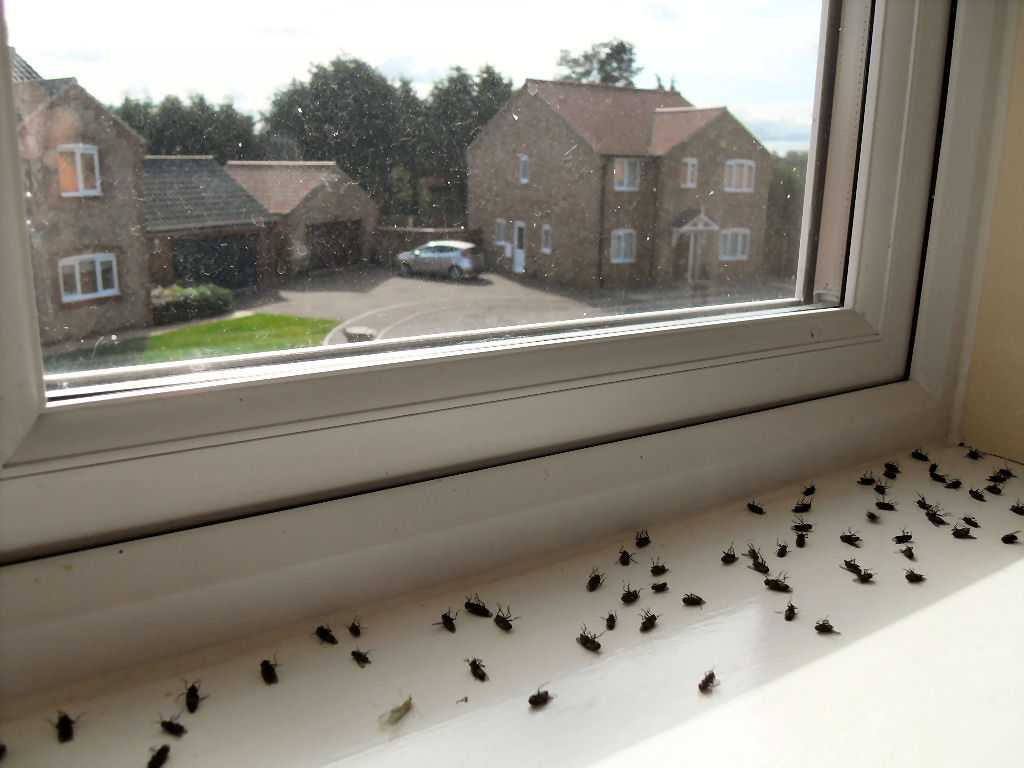
Winter & Early Spring: On warm, sunny winter days the flies sense the heat radiating from sun-warmed walls and become confused — they think it's time to emerge. Instead of getting back outside, they end up inside your living space. This is when you see them congregating on windows, sluggish and disoriented.
Spring: As temperatures consistently rise, surviving flies work their way back out. Any that became trapped inside your living space will die within a couple of weeks — they have no food source indoors.
Are cluster flies harmful?
The good news: cluster flies do not damage your home's structure, they don't breed indoors, and they carry no known diseases of medical significance to humans. They're a nuisance pest — full stop.
What they do leave behind are small dark spots on your windows and walls. Those spots are secretion fluid from their salivary glands — not a health hazard, but unsightly and a pain to clean up, especially when you're dealing with hundreds of them.
Important: Don't treat wall voids or attic spaces where cluster flies are overwintering. Killing large numbers of flies in enclosed spaces can attract secondary pests — carpet beetles and other insects that feed on dead insects. The goal is to prevent entry in the first place, not to treat from the inside.
What actually works — and what doesn't
A fly swatter works fine for the occasional stray that wanders into your living space in February. But when you're dealing with hundreds of flies, it's not a realistic solution — and it does nothing to address next year's population.
Sealing cracks and gaps on the exterior of your home is worth doing, and it helps. High-quality silicone or silicone-latex caulk on gaps around windows, doors, soffits, and utility penetrations will reduce entry points. But in a mountain home — especially older construction — you genuinely cannot seal everything. Flies will find a way in through gaps you can't see.
The most effective approach is a professionally applied exterior chemical barrier, timed correctly and using the right product. This is where a lot of DIY efforts fall short.
What John Chaney looks for in an effective cluster fly treatment
Timing: Treatment needs to happen in late summer or early fall — before flies begin entering the structure. Once they're in the walls, exterior treatment has limited value.
Chemistry matters: Less expensive formulations won't hold up to Colorado's UV exposure. The active ingredient needs to be suspended in a micro-encapsulation or crystal formulation so it stays active on the surface longer.
No emulsifiers: Better-quality products don't use emulsifiers to carry the active ingredient. Emulsifiers can stain siding, wood, and painted surfaces — a real concern on mountain homes.
Application method: Spot, crack, and crevice treatments applied strategically to exterior entry points — not a blanket spray — deliver the best results with the least product.
Frequently asked questions
Why do I only see cluster flies in winter and early spring — not summer?
Cluster flies spend summer in moist outdoor areas near earthworms. They only enter homes in fall to overwinter, and they become visible indoors when warm winter days trigger them to try to emerge — but they end up in your living space instead of outside.
Do cluster flies come back every year?
Yes. They return to the same structures year after year. If you had cluster flies last winter, you'll very likely have them again without a proactive exterior treatment in late summer.
When is the best time to treat for cluster flies in Colorado?
Late August through September — before flies begin congregating on your exterior walls. That's the window when a professional exterior barrier treatment is most effective.
Can I spray inside my walls to kill them?
It's not recommended. Killing large numbers of flies in enclosed wall voids can create a secondary pest problem as other insects move in to feed on the dead flies. Focus on exterior prevention.
Are cluster flies the same as house flies?
No. They're a different species, slightly larger, and have a completely different life cycle. Cluster flies are parasites of earthworms and do not breed in garbage or waste. They're a nuisance pest, not a sanitation issue.
Contact Chaney Pest Elimination
Tired of watching cluster flies take over your windows every winter? The time to act is late summer — before they're already in the walls. Chaney Pest Elimination serves Teller, Park, El Paso, and Chaffee Counties, including Woodland Park, Divide, Florissant, Cripple Creek, Fairplay, and Cañon City.
Call: (719) 650-0246
Email: chaneypestelimination@gmail.com
Website: www.chaneypestelimination.com
Need help with a pest problem?
Free quotes throughout Colorado Springs, Teller County, and the mountain communities.